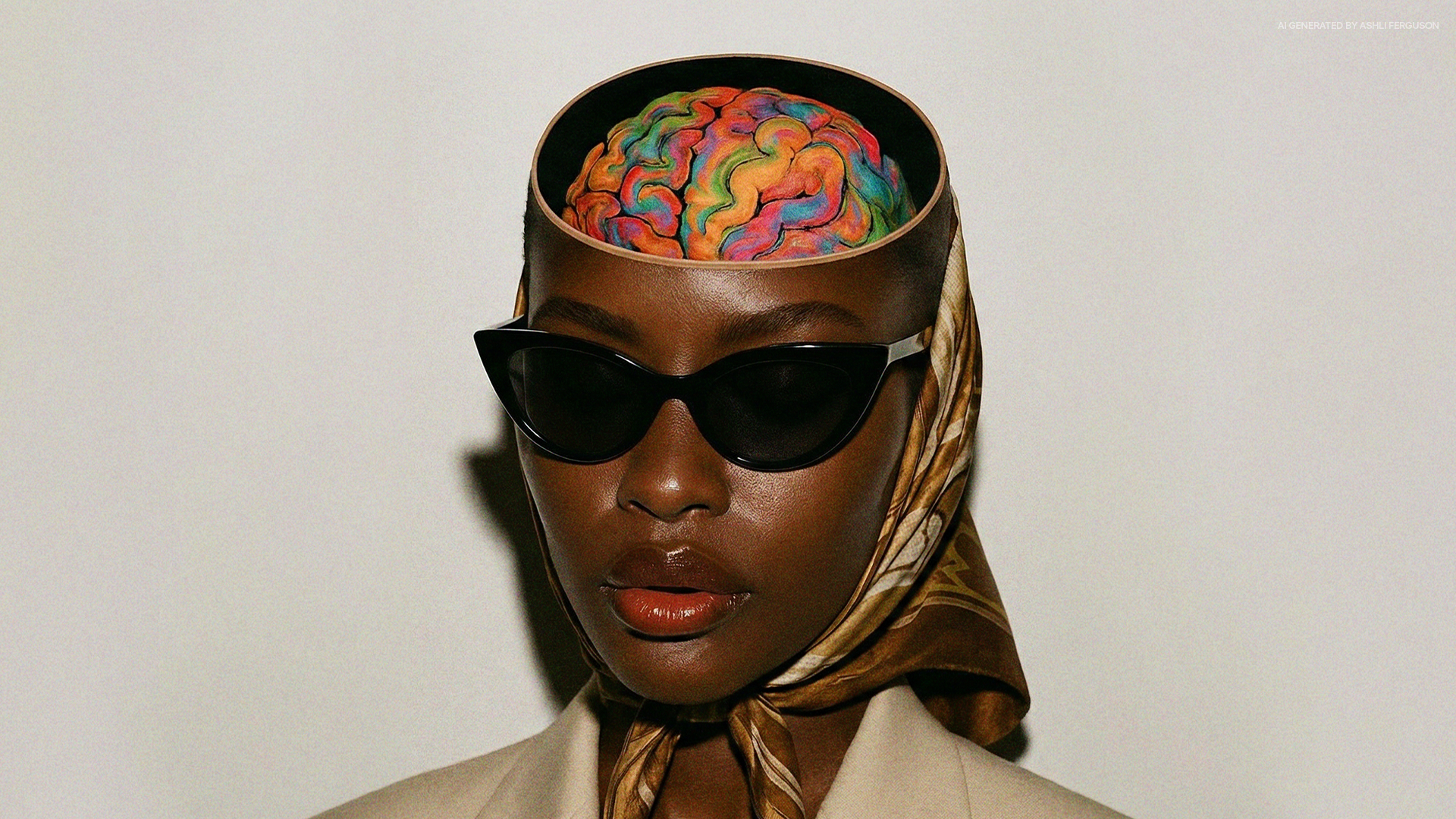
Left Brain vs. Right Brain
Left Brain vs. Right Brain
We think about creativity as if it lives solely on one side of the brain. People feel that you either have it or you don’t. It’s true that some people are “the ideas person” and other people are “the strategy person.” But the best creative work has never been only one or the other.
Right-brain creativity is the part that imagines what could be. It pushes past the obvious. It takes a business goal and turns it into a concept you can actually visualize. Left-brain creativity is the part that makes the idea make sense and work in a tangible way. It turns the concept into a system.
If you only have right-brain thinking, the work might be exciting but impossible to ship. If you only have left-brain thinking, the work might be “correct” but very bland and forgettable. The balance is why creatives who can use both their left and right brain are more essential to brands now more than ever.
Businesses are realizing something they ignored for a long time: design is becoming more than just pretty aesthetics. It is how people experience the brand. It is how they decide if they trust it. It is how relationships are built with customers and community.
Good design is
good business.
Thomas J. Watson Jr. said it best…

A business in 2026 will not be sustainable as only having a “design-driven culture.” without being customer-connected and community-focused.
But what does engaging customers actually look like in 2026?
-
⇢ Brands building a rapport with niche influencers and tapping into their community
⇢ Community-first events that are not just marketing stunts
⇢ Real feedback loops where people see what changed because they spoke up
⇢ Products that solves actual problems, not problems a brand invented
⇢ Better service design: clearer onboarding, clearer pricing, clearer support
⇢ Personalization that feels helpful, not creepy
⇢ Partnerships with local communities that have real impact
To be able to do this, you’ll have to really get to know who your audience is.
This is where research enters the chat.
Insights and research help us present something we already know but from a new angle. Or they help frame new information in a way that makes people care. Data could not possibly replace creativity but it does make the creative connect.
Here are two questions I like to ask when I am thinking with my left brain:
What is the data telling us about the people we are observing and the decisions they make?
Does the data contradict what we assume, or confirm an underlying truth we did not name yet?
Strong insights inspired by data lead to stronger concepts. Stronger concepts lead to more relevant and memorable work. Relevant and memorable work wins attention, wins trust, and wins business.
And if you are the person developing ideas on your team, it is part of your job to look for the data and the insights that can help inspire the work.
A few years ago, I worked on a spec project developing a brand identity for a New York City-based burger bar. When it came time to build the color palette, I was a bit curious about how to make it “different”. Most fast food brands rely on primary colors like red, yellow, and blue.
Think McDonald’s, Wendy’s, Burger King, Chick-fil-A, Five Guys. However, I did not want to choose colors solely because it was the “right” or “normal” thing to do. I mean, it is a burger bar in New York City. That means the cities should have some influence over the art direction, right?
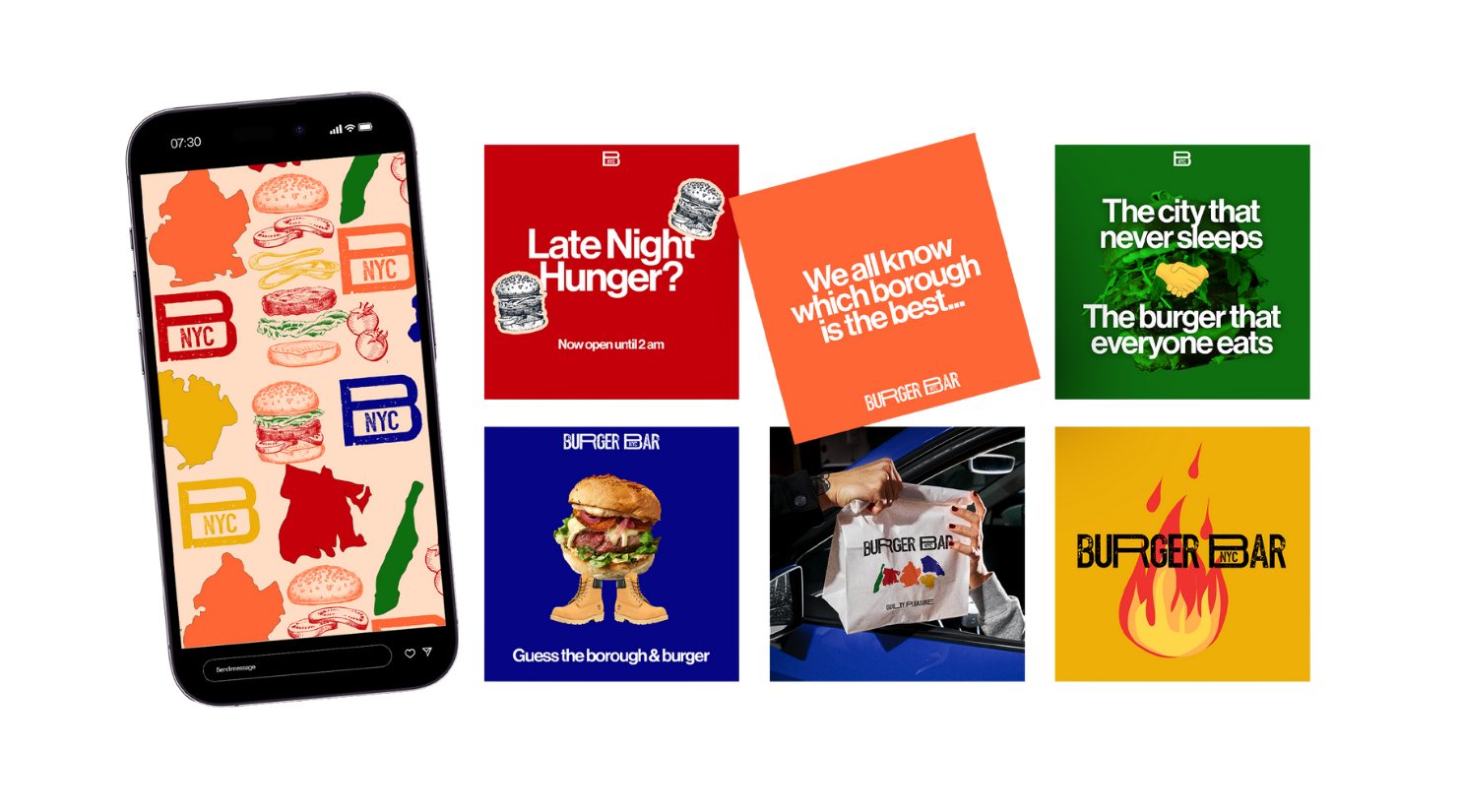
I started with the first thing I knew: New York City has five boroughs. The Bronx, Brooklyn, Manhattan, Queens, and apparently, Staten Island.
In my research, I found that each borough had its own flag. They are not widely used today, but they gave me something more interesting than “fast food colors.” The flags helped me pull a palette that felt native specifically to New York, not just rooted in burgers.
