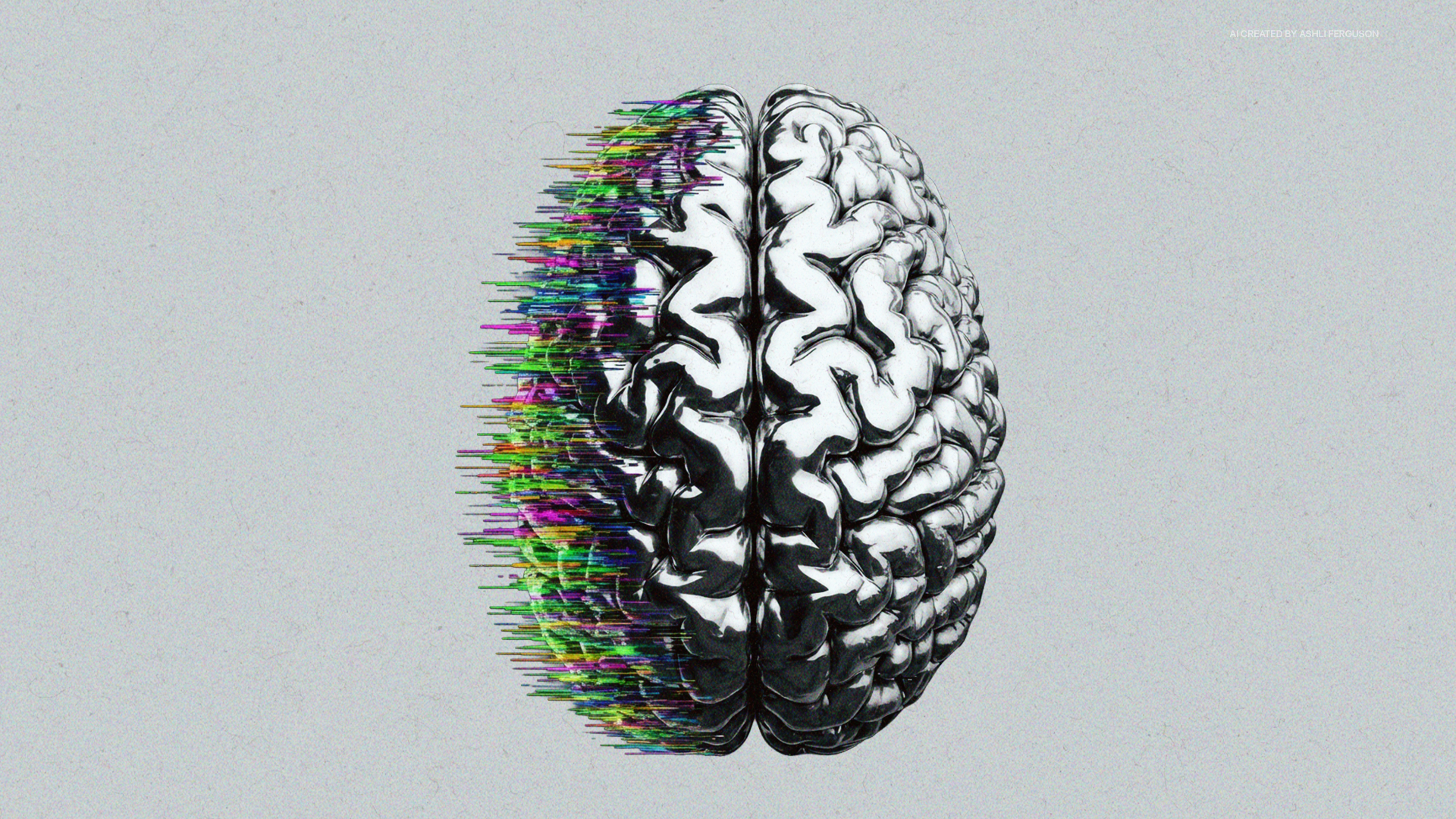
Leave Room For Your Imagination
Leave Room For Your Imagination
Every design project starts with a problem.
Sometimes the problem looks straightforward such as a product needs to feel easier to use, a brand needs a logo, a campaign needs a visual language, an idea needs a clear illustration. But in my experience, the most important part of the design process isn’t jumping to any solution, but making sure I’m solving the right problem in the first place.
Because the truth is, clients and designers can both think about problems too narrowly. And when a problem gets defined too early, it leaves no room for imagination.
A creative “solution” is often a placeholder for the real need.
A client might say, “We need a new logo.” And sometimes that’s true. But often, “new logo” is a stand-in for something deeper:
“People don’t understand what we do.”
“Our website isn’t converting.”
“We’re not impacting our community.”
“We’ve grown, but our brand still looks like our old chapter.”
“Our marketing feels scattered and we can’t tell what’s working.”
It’s not that the logo doesn’t matter. It’s that a logo can’t carry a business on its back if the foundation underneath it is unclear. As creatives in this field it’s our job to diagnose a brand.
Questions that I ask early.
What are you hoping changes after this design project is complete?
That question tends to reveal what the client really wants. And once we name the true outcome, the design direction gets a little more clear and the strategy gets honest.
Why the beginning needs to be messy.
In the beginning of every design process, ideas are plentiful, and many get abandoned, but that’s the nature of our work. Before the final concept exists, there’s usually a stretch of playful, open-ended study. I think of this phase as imaginative research: the part of the process where you let the problem breathe long enough for better options to appear.
This can look like:
⇢ writing lists
⇢ mind-mapping
⇢ visual mapping
⇢ research deep-dives
⇢ interviewing
⇢ focus groups
⇢ sketching images and shapes without judgment
Brainstorming is a way of widening the room.
Brainstorming and mind-mapping me generate core concept ideas. I like to say brainstorming is attacking a problem from many directions at once but not being bound to normalities, which leaves room for playfulness.
That “what if” moment is the doorway. You can’t get there if you treat research like a play tool.
Research watches people, not just trends.
One of the most valuable tools in my process is ethnography which is the practice of gathering insight through observation, interviews, and questionnaires. I use it to explore how people interact with objects and spaces, and how they actually behave, not how they think they behave.
Because here’s something I’ve learned: people aren’t always the best at verbally articulating what they want.
But they show you.
They show you in their body language when they’re confused by a page layout. They show you in their personal surroundings when their environment tells a story of what they value. They show you in the brands they already trust. They show you in what they avoid, what they keep repeating, what they hesitate before answering.
For example, someone might say they want a website that feels “high-end,” but when you show them three different directions, their eyes light up for the one that feels calm, minimal, and spacious and not the one filled with bold luxury cues. Their reaction is data. Their body answered before their words did.
Ethnography reminds me that good design isn’t about guessing it’s about being observant.
Going into the client’s world through Field Research.
Field research means leaving your own mindset at the door, and entering the client’s environment. Observe how they operate. Listen to what they care about. Understand their concerns, their story, their community, and what they’re trying to change.
This part matters because context changes everything.
When you take the time to understand the human behind the project, you gain empathy and not in a performative way, but in a practical way. You start making design decisions that respect their reality.
Interviewing helps connect designers to clients as people. You get closer to their motivations and you stop treating “the brand” like a concept floating in space. You start seeing it as a living thing shaped by pressure, purpose, and intention. And that’s a basic principle of communication: you can’t communicate clearly if you don’t understand who you’re communicating to or why you’re even communicating in the first place.
Great design is relational.
Inspiration doesn’t live inside the industry or your four walls.
As designers, we can discover ideas for color, typefaces, illustration, and texture from the world outside the usual references. Through art, nature, media, science, architecture, film, street signage, museum exhibits, even everyday objects.
Ideas can come from anywhere.
Every creative draws from the culture they’re currently experiencing. The world is always offering visual inspiration if you pay enough attention. Imaginative research is about feeding your five senses and your instincts with more than the same recycled visual trends.